
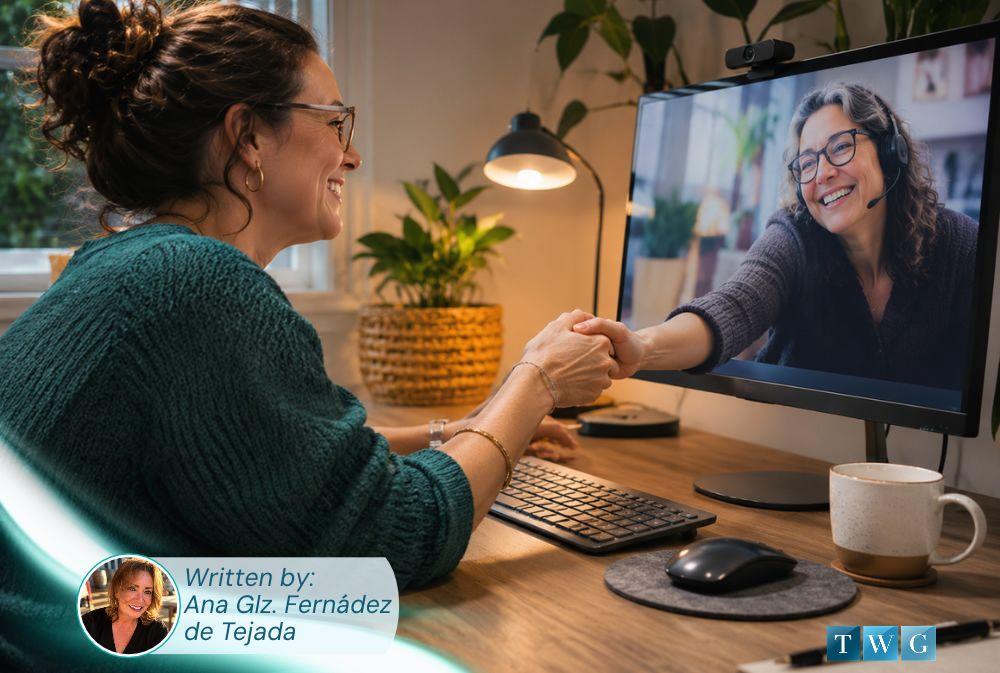
Beyond the Home Office: The Human Side of Remote Work
In this article:
For most of the last century, working meant going to the same place every day, sharing a physical space with colleagues, and following a fixed routine. The office was the center of professional life and, in many ways, the place where relationships, corporate culture, and a sense of belonging were built.
That world has changed. Remote work has moved from an occasional alternative to an everyday reality, and the change involves far more than replacing an office with a room at home. It asks us to rethink how we organize our time, how we measure performance, how we build trust, and how we make sure people still feel part of a team when they do not share the same space.
At TalentWorldGroup, this is not a theoretical question. We are a fully remote company, and more than 3,500 people around the world work with us from wherever they live. From my perspective in Human Resources, the true potential of remote work lies not only in the flexibility it offers, but in the opportunity to build a more humane and inclusive way of working that supports a better quality of life.
Freedom, Trust, and Responsibility
One of the greatest advantages of remote work is the autonomy to organize one's own day. Managing one's time, adapting to personal needs, and eliminating the daily commute can significantly improve many people's lives. Work starts to fit into life, rather than life revolving around work.
Freedom also comes with responsibility. Working from home does not mean working with less commitment. It means taking a more active role in organizing tasks, managing time, and meeting goals.
The essential ingredient is trust. Organizations must trust that their people can organize themselves and deliver without constant oversight, and people must understand that autonomy requires commitment, communication, and teamwork.
This calls for a real change in culture. For decades, many organizations associated productivity with physical presence: being in the office and being visible to managers. Remote work challenges that mindset. Productivity should be measured not by the time someone spends at a desk, but by the quality of their work, their results, and their contribution to shared goals.
Rethinking Old Habits
In my experience, people have often adapted to remote work faster than the structures around them. They have learned new tools, new ways of communicating, and new levels of autonomy, while maintaining their performance and attending to the rest of their lives.
Some organizations, however, still manage remote work with the same criteria they used in the office. The result is often the traditional office transferred to a screen: more meetings than necessary, oversight driven by distrust, and an expectation of instant availability at every moment.
Remote work should not mean replicating office habits from a distance. It is an opportunity to reassess which practices truly add value. That does not mean removing structure. In many roles, including customer service, schedules, quality monitoring, and compliance controls are essential, because they protect both the customer and the person doing the work. The difference lies in the purpose: structure that supports quality and fairness builds trust, while control for its own sake erodes it.
Organizations that get this right build their models on clear objectives, effective communication, trust, and fair performance evaluation, so that people can work autonomously without losing the support and guidance they need.
Working Remotely Does Not Mean Working Alone
If there is one risk we must take seriously, it is isolation. Remote work reduces the spontaneous interactions that happen naturally in an office: a conversation during a break, a quick question, a shared celebration, or simply the chance to get to know colleagues better.
When those small moments disappear, professional relationships can become purely operational. Messages are limited to pending tasks, meetings focus only on results, and people can end up feeling disconnected from the rest of the team.
This is a shared responsibility. Organizations must create the conditions for people to feel supported, heard, and recognized. Individuals also play a part, by participating, communicating, showing interest in their colleagues, and actively building relationships.
Team cohesion does not depend on sharing an office. Teams can be united, committed, and effective even when their members have never met in person. But it does not happen automatically. It requires well-designed internal communication, the right channels, spaces for sharing experiences, and a culture in which people are valued for more than the tasks they complete.
Recognition matters as well. Acknowledging effort, congratulating colleagues on a job well done, and celebrating shared successes may seem small, but they contribute greatly to a sense of belonging. Informal virtual gatherings and team activities serve the same purpose: not to work more, but to strengthen relationships and remind us that there is a person behind every screen.
We do not need to share an office to feel part of a team, but we do need to feel connected.
Talent Should Not Have Borders
Remote work also widens access to opportunity. Traditionally, where you lived strongly shaped your career prospects, and living near a major business center could make the difference between being considered and being overlooked.
Today, it is possible to collaborate with international teams and build a career with an organization in another country without relocating. This is particularly valuable for people who live in smaller towns, have family responsibilities, face mobility challenges, or for other reasons cannot travel to a workplace every day. For organizations, it opens recruitment to professionals with a far wider range of backgrounds, experiences, and perspectives.
We see this every day at TalentWorldGroup. We recruit native speakers wherever they live, including many who have built their lives outside their home country, and we build teams around skills rather than location.
From a Human Resources perspective, this is an opportunity to shift recruitment and promotion toward competencies, experience, and results. Remote work can also help reduce some of the bias associated with physical presence, although it does not remove it on its own. Cameras still show faces, and prejudice does not disappear automatically. Keeping the focus where it belongs takes deliberate effort.
Age, gender, background, or physical appearance should never be obstacles to a professional career. What should matter is each person's talent, ability, attitude, and contribution.
A Better Life Without Sacrificing a Career
Remote work is also changing our relationship with where we live. For decades, many people had to move to large cities to access better opportunities, accepting high housing costs, long commutes, and sometimes a quality of life they did not want.
In Spain, for example, the high cost of housing in many cities is leading more and more people to look beyond the major urban centers. Living in a small town, in a rural setting, or closer to nature becomes a realistic choice when it no longer means giving up professional opportunities. With remote work, someone can live in a village by the sea or in the mountains and still work for an international organization, grow their career, and belong to a team spread across the globe.
Rural communities benefit too, as they can attract residents, economic activity, and talent. Less daily travel also means more personal time and a lower environmental impact.
We should not idealize remote work. Not everyone has the right conditions at home, and not every profession can be done remotely. It requires a suitable space, good organization, and the ability to set boundaries between personal and professional life. But when circumstances allow, it gives people the freedom to decide how they want to live without limiting how far they can go professionally.
Career development should not depend on a ZIP code.
The Future of Work Must Remain Human
Debates about the future of work often focus on technology: digital tools, artificial intelligence, and new organizational models. All of these matter, but we should not lose sight of the people. Even the best platforms cannot replace trust, recognition, empathy, or belonging.
The challenge for organizations is not simply to enable people to work from anywhere. It is to make sure they can do so effectively without losing human connection. That requires leaders who manage by objectives, teams that know how to communicate, and organizations willing to rethink their practices.
Remote work is not perfect, nor is it the answer to every workplace problem. It can bring isolation, communication difficulties, and blurred boundaries. These challenges should not lead us to reject the model, but to improve it.
The real question is not whether to work in an office or from home. It is how to create environments where people can reach their full potential, feel valued, and maintain meaningful professional relationships, wherever they are.
Working remotely should not mean being further away from people. It should mean more freedom to live, more opportunities to grow, and the same chance to be part of a team.
About the Author
Ana is a human resources professional at TalentWorldGroup, working remotely with colleagues worldwide. Before joining TWG, she started and managed her own real estate company, gaining hands-on experience in sales, business development, and client relationships.
Her business background, along with a genuine passion for people and collaboration, defines her working style. Originally from Spain, she values the flexibility and improved quality of life that remote work brings.
Share this article


Stay in the know
Discover more articles, explore emerging trends, and stay connected with the future of remote work, global recruitment, and business process outsourcing by staying informed with the latest industry news, expert perspectives, and insights from TalentWorldGroup.