
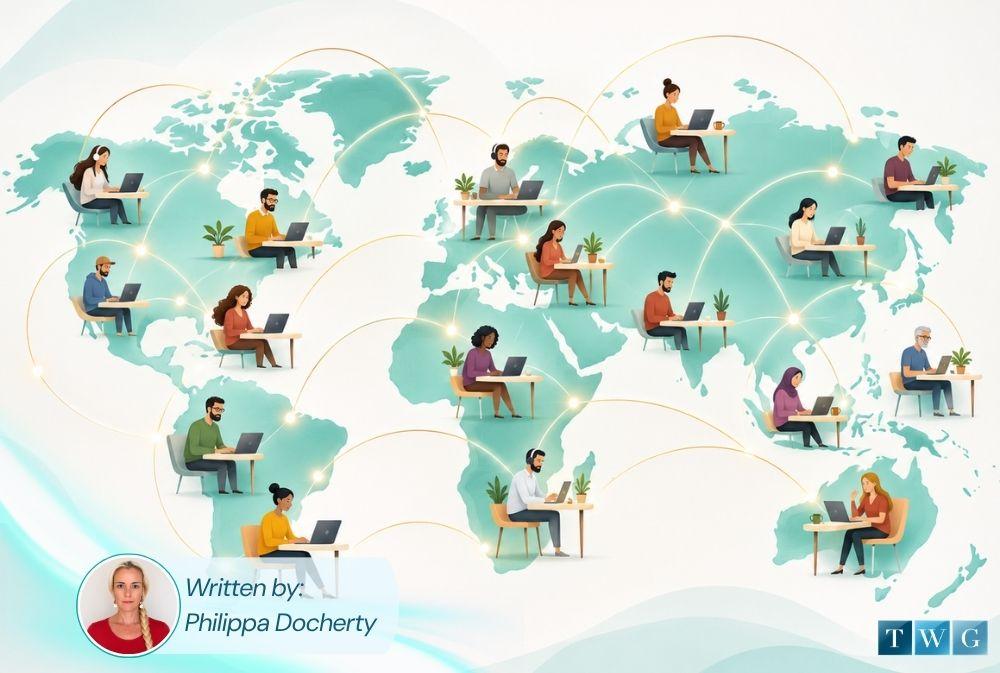
From Remote Teams to Connected Workforces
In this article:
Why Community Management Matters in a Distributed Workforce
For organizations with a remote or distributed workforce, building a sense of belonging takes more than providing employees with communication tools and occasional opportunities to socialize.
While remote work offers flexibility, autonomy and access to opportunities regardless of location, maintaining meaningful connections across teams remains one of the biggest challenges facing modern organizations. When people work across different locations, countries, departments and time zones, relationships cannot always develop through everyday workplace interactions. They need opportunities to form beyond the immediate demands of the job.
This is particularly relevant to the BPO and outsourcing industry. An employee may spend most of their working day focused on a specific client, project or contact center operation. While those teams depend on strong communication and collaboration, their interactions can become almost entirely task-focused. Over time, this can create a disconnect between being part of an operational team and feeling connected to the wider organization.
Community management plays an important role in bridging that gap. It is often associated with organizing virtual events, maintaining internal social channels and encouraging employees to participate in company activities. While these can contribute to a successful community, they represent only part of a much broader responsibility: creating an environment where people can develop relationships, share experiences and feel connected to something beyond their immediate work.
Why Employee Communities Matter in Distributed Organizations
Working remotely changes how people build relationships with colleagues. In a traditional workplace, many interactions happen naturally. People meet in corridors, chat during breaks, get to know colleagues from other departments and develop friendships through everyday experiences.
A distributed workforce does not have the same opportunities for spontaneous interaction. Employees may work for months alongside the same colleagues without ever interacting with people in other departments or projects. New starters may know their immediate team but have little understanding of the wider organization. People working in different countries or time zones may have few opportunities to connect outside scheduled meetings.
This can create organizational silos, particularly in businesses where employees are assigned to specific clients or operational teams. An internal community helps create connections across those boundaries. It gives employees opportunities to meet people they would not ordinarily work with, discover shared interests, exchange knowledge and develop relationships beyond their immediate responsibilities.
The objective is not to replace professional communication or team structures. It is to create an additional layer of connection that helps people feel part of the wider organization.
Communication Is Not the Same as Community
Modern organizations already have plenty of ways to communicate with employees. Internal messaging platforms, company announcements, newsletters, video calls and project management tools allow information to move quickly across distributed teams.
However, communication and community serve different purposes. A message announcing a process change fulfills an operational need. A company-wide update keeps employees informed. An internal social platform provides somewhere to share information. None of these automatically creates relationships between the people using them.
Community management focuses on what happens beyond the exchange of information. It involves creating opportunities for employees to interact, contribute and participate in ways that are not limited to their immediate responsibilities.
GitLab offers a useful example. The company has operated as an all-remote organization since its earliest days and, rather than relying on employees to build connections independently, it deliberately builds informal communication into its culture. Every person who joins GitLab is expected to schedule at least five coffee chats during onboarding, and its wider approach includes social calls and opportunities to connect with colleagues outside day-to-day project work. GitLab teams have also used Donut, a Slack app that randomly pairs colleagues for virtual coffee, helping people meet colleagues they might not otherwise encounter.
Give Employees Opportunities to Shape the Community
A successful employee community should not be something entirely created and controlled by the organization.
While community managers help establish direction and provide opportunities for participation, employees should also have the freedom to contribute ideas, initiate activities and influence what the community becomes.
This is particularly important when bringing together people with different interests, backgrounds and working arrangements. Not everyone will want to participate in the same activities, and a community built entirely around a fixed program of events may struggle to appeal to a diverse workforce.
Automattic, another fully distributed organization, provides an interesting example through its Connectomattic initiative, where employees can propose activities based on shared interests and experiences. Activities have included book clubs, baking sessions, open mic nights and other opportunities for colleagues to connect outside their normal responsibilities.
The important aspect of this approach is that employees are not simply invited to attend activities organized by someone else. They help create them.
At TalentWorldGroup, community building is supported through initiatives such as a daily informal Coffee Break drop-in session, themed social events such as karaoke and movie nights, knowledge-sharing discussions and employee-led activities. Many of these sessions are hosted by both Leaders and Talents (TalentWorldGroup's term for its Customer Support Representatives). This gives employees a sense of ownership and allows the community to develop around the interests and contributions of the people within it, helping colleagues from different projects, countries and teams build relationships beyond their day-to-day operational responsibilities.
Ultimately, successful employee communities are built not only through the activities offered but by giving people the opportunity to shape the conversations, connections and experiences that make the community their own.
Build Connections Across Different Groups
Employee communities can provide something that traditional team structures do not always offer: opportunities for people to connect through shared interests, experiences or identities rather than job titles.
Employee Resource Groups (ERGs) are one example. These voluntary, employee-led communities bring people together around common experiences, professional interests or shared identities. They can create opportunities for networking, peer support, professional development and organizational involvement.
Atlassian has developed multiple Employee Resource Groups as part of its approach to inclusion and connection across a distributed workforce. Importantly, the company funds activities that build community and compensates ERG leaders for their time and effort. Each group draws on an operating budget for its programming and a separate pool reserved for its leaders, so that the people running these communities are not expected to do so for free.
This highlights an important consideration for organizations: employee communities need support and recognition if they are expected to thrive. Asking people to contribute their time and take responsibility for building relationships across an organization should not be treated as an informal extra that happens entirely outside their recognized responsibilities.
Community Management Requires More Than an Events Calendar
Events are often the most visible aspect of an employee community. They provide a shared experience, give people a reason to interact and can introduce employees to colleagues they might not otherwise meet. However, a successful community needs to exist between those events as well.
Twilio offers another example of how a remote-first organization combines employee-led communities, virtual activities, local gatherings and employee feedback initiatives to create an ongoing employee experience rather than relying on individual events alone.
Community management involves understanding the people within the organization, identifying opportunities for connection and creating ways for employees to participate. The work can include facilitating discussions, encouraging member-led initiatives, recognizing contributions, connecting people with shared interests and making sure employees have opportunities to be heard. It also involves paying attention to who is participating and who may be missing out.
For a global workforce, this could mean offering different opportunities for people in different time zones, providing asynchronous ways to contribute and making sure that participation does not depend entirely on being available for live meetings. Not everyone wants to join a video call or take part in a competition. Some people prefer to contribute through discussions, share knowledge or simply observe until they feel comfortable getting involved.
An inclusive community acknowledges that employees engage differently and provides multiple ways for people to participate.
What Employee Community Management Means for BPO Organizations
For BPO and outsourcing businesses, employee communities can play a particularly valuable role in connecting people across otherwise separate operational structures.
A Talent supporting one client account may have limited interaction with someone working on a completely different operation. Leaders may build strong relationships within their own teams yet have few opportunities to connect with colleagues elsewhere in the organization.
An internal community creates opportunities to bridge those gaps. It can provide spaces for employees to share interests, celebrate achievements, exchange knowledge and develop relationships beyond their immediate projects, and it can help new starters discover the wider organization. This is particularly important in a fully remote environment, where the wider company experience needs to be created intentionally.
Strong employee communities can also support broader business outcomes. When employees feel connected to colleagues and the wider organization, they are more likely to collaborate across teams, share knowledge and remain engaged over time.
Measuring the Value of an Employee Community
Community management can be difficult to measure if success is defined only by the number of events organized, messages published or people attending activities. These figures provide useful information, but they do not necessarily show whether employees are developing stronger relationships or feeling more connected to the organization.
A more meaningful approach considers the quality of participation and the relationships forming within the community. Useful indicators include:
- How many employees contribute independently, rather than only attending.
- Whether people from different projects, countries and teams are interacting.
- How frequently members support one another.
- Whether employees take the initiative to organize activities or discussions themselves.
Feedback is equally important. Understanding what participants value, what they would like to see more of and what prevents them from participating helps community managers continuously improve the experience.
The objective is not to maximize participation in every activity. It is to create a community that provides genuine value and continues to evolve as employee needs change.
Belonging Is Built Over Time
There is no single platform, event or initiative that creates a successful employee community. Instead, belonging develops through repeated opportunities for people to connect, contribute and build meaningful relationships over time.
For distributed organizations, this requires intention. Employees need spaces where they can exchange ideas, discover common interests, recognize one another's contributions and participate in ways that suit their individual working styles. Most importantly, they need to feel that the community belongs to them rather than being something imposed on them by the organization.
Technology may enable remote work, but community is what transforms a distributed workforce into a connected one.
Communication keeps people informed. Community helps them belong.
About the Author
Philippa is a Community Manager at TWG, where she has been part of the team for 4.5 years. A branding specialist with a professional background in marketing, graphic design and project management, she brings extensive experience in communications, content and creative development.
Based in the Canary Islands with her husband & three rescue cats, she enjoys travelling & discovering new destinations.
Visit Philippa’s LinkedIn Profile
Share this article


